
destrucción archivo
Since 2025, over 31 environmental and public health laws have been waived to advance border wall construction through South Texas. It has allowed the wall to be built through 13 refuge tracts, all crucial to the survival of our animal relatives in the increasingly urbanized region of South Texas, which has severe fragmentation and limited green spaces for animals to live in. These refuges hold important wildlife corridors and endangered and endemic species that face imminent threat with the presence of the border wall. The border wall blocks natural migration routes and activities, preventing our animal relatives from:
accessing the river (an invaluable water source as most of our wetlands and bodies of water are heavily impacted and controlled by capitalistic systems),
affecting natural water and drainage systems as plants are stripped from the soil and no root systems are in place to hold water (increasing flooding),
allows for invasive species to take over the barren soil (increasing ticks and diseases),
creates light and sound pollution, which has been shown to interfere with natural bodily functions and birth rates in animals,
creates hotspots where slabs of concrete have been poured,
causes fragmentation as the wall cuts through lands and separates them,
increases the chance of a population bottlenecking as animals are alienated from each other and forced to evolve and, in extreme cases, interbreed,
genetic bottlenecking sensitive and endangered species,
creates spaces to nest in border construction materials (where they are susceptible to being killed by irresponsible workers),
increased pollution to the river as a result of improperly disposed of construction materials/runoff water/runoff concrete spills/runoff soil into a body of water, which can cause turbidity to increase and eventually consume and cause stagnation in a body of water (which can lead to increased mosquitoes and, as a result, diseases),
increased predation of small animals as they squeeze through designated corridors in the wall (which leads to an imbalance in the food web),
ineffective corridor slips through the wall that larger animals cannot squeeze through, increased deaths of animals by construction workers as animals attempt to migrate and are crashed into or crushed with big machinery,
increased chance of death as there are public hunting grounds near the border wall and animals that are attempting to find a way to cross the wall are cornered and become targets,
and more consequences that have yet to be recorded.
FRAMGENTED RELATIVES
A CPB-funded speaker [using the voice of a Valley native] announcing:
“Atención: El Río es una zona militarizada. Una regla de seguridad de propiedades de defensa prohíbe la entrada por el río. Entrando por esta área, constituye una violación de esta regla. Si cruzan el río, estarán entrando ilegalmente y serán inquistiados.”
This plays 24/7, creating fear in people who migrate and creating noise pollution for wildlife.
An American badger crosses through desolate soil, which was formerly thorny brushlands designed to help small animals hide and migrate safely.
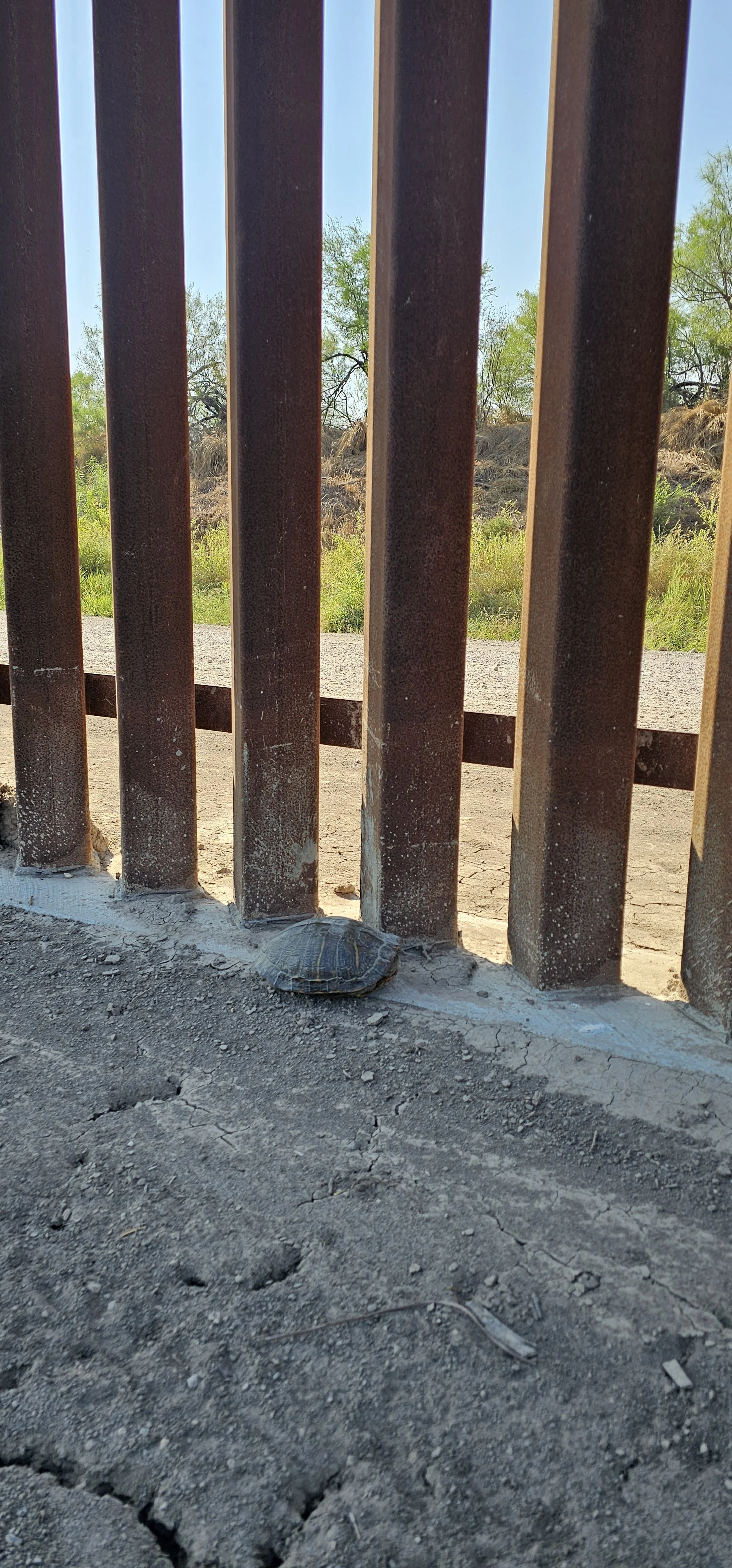
A Texas cooter trying to squeeze through border wall panels. The spacing between the panels is unsuitable for many larger or wider animals to cross, resulting in these relatives walking for extensive swaths of uncovered land along the border wall, looking for a way to cross, and leaving them vulnerable to predators and humans.
Before the border wall construction, this was an area where a body of water flowed through a small canyon. A great egret makes its way through what used to be a small stream of water, seemingly searching for a body of water that has been destroyed and remains only in memory.
A family of turkeys walks alongside the border wall, looking to cross over to the southern side where the river flows.